Participant 2 – RUB

Ruhr-University Bochum

The Ruhr-University Bochum (RUB) is one of the largest public universities in Germany. The RUB is the university renowned on the international scale by the fundamental research in material science and quantum physics, as well as multidisciplinary applied research in modern quantum electronics. The RUB group of the project is a part of Institut für Theoretische Physics III (TP III) of the RUB. The researchers of TP III have obtained over the last decades a large number of fundamental scientific results in the field of superconductivity, quantum many body theory, quantum physics of low-dimensional systems, e.g. graphene, topological insulators.

Website of the Ruhr-University Bochum: http://www.tp3.rub.de/

Researchers involved in the SUPERGALAX project

The RUB partner group (Prof. Ilya Eremin (PI) and Dr. Mikhail Fistul) has a long established expertise in a theoretical study of coherent quantum phenomena in various metallic, magnetic, semiconducting and superconducting nanostructures under equilibrium or non-equilibrium conditions. Last several years the RUB group has also concentrated on the number of projects related to the analysis of the proximity effects in heterostructures containing magnets and superconductors, analyzed the properties of unconventional superconductors, studied unconventional methods of quantum computing, i.e. Majorana fermions or skyrmions.

Prof. Dr. Ilya M. Eremin (Gender male), was born in 1974 in Kazan, Russia. In 1996 he was graduated in Physics from the Kazan University, Russia. After obtaining his Ph.D. in Russian Federation at one of the leading universities Kazan Federal (State) University in 1999 in the area of Theoretical and Mathematical Physics, he moved to Germany first as Alexander von Humboldt fellow with Karl Bennemann from the Free University of Berlin and later as a long-term post-doctoral research associate (Wi.Mi.) in the group of Felix von Oppen. In February 2005 he joined the Max-Planck Institute for Physics of Complex Systems in Dresden (joint offer with TU Braunschweig) as a junior-professor. In April 2010 he was appointed as a W2 Professor (tenured Associate Professor) in Theoretical Physics (Condensed Matter theory) at the Ruhr-Universität Bochum. In January 2020 he was promoted to the full (chair) professorship in Condensed Matter Theory at the Ruhr-Universität Bochum.

The main scientific interests lie in the field of quantum many-body effects in application to solid state systems both analytically and numerically. To be more precise he is interested in the theoretical investigation of collective effects in novel materials like strongly correlated low-dimensional electronic, topologically non-trivial and magnetic systems. It includes unconventional superconductivity phenomena, exotic collective excitations in geometrically frustrated systems and their topological properties, and application of these effects for novel spintronics quantum computing devices as well as the effects out of equilibrium. In his research, he is using modern methods of theoretical physics, ranging from numerically based modeling including the electronic corrections, and density matrix approaches for non-equilibrium systems as well as more analytical quantum field theory methods for effective theories including the renormalization group and exactly solvable models.

Overall, he published more than 150 research papers in the refereed journals such as Physical Review B, Physical Review Letters, Nature, Nature Communications, Nature Physics, New Journal of Physics, Europhysics Letters and so on. He has established the research group at Ruhr-University in Bochum. Presently he is supervising several Ph.D. students (Dipl.-Phys. Jakob Böker, started Autumn 2016, Dipl.-Phys. Dustin Altenfeld, started in 2014, Dipl. Phys. Fabian Lambert, started in 2015, Dipl.-Phys. Marvin Müller, started in 2017, Samme Dahir, started in 2018), and several Bachelor and Master students. His current h-index is 39 (Google Scholar), 31 (WoS).

Dr. Mikhail V. Fistul (Gender male), was born in 1959 in Moscow, Russia. In 1981 he was graduated from the Department of Theoretical Physics of Moscow Steel and Alloys Institute (MISiS). In 1984 Dr. Mikhail Fistul has received his Ph.D. in Physical and Mathematical Sciences from the MISIS, Russia. His scientific adviser was prominent Russian physicist Prof. Lev Aslamazov. In 1984-1991 Mikhail Fistul kept various research positions (Junior Researcher, Senior Researcher) at MISIS. From 1991-1997 he worked as the Research Associate at Purdue University, IN USA. In 1998-2000 he worked at the University Erlangen- Nürnberg as the recipient of the Alexander von Humboldt Research Fellowship. Up to now Dr. Mikhail Fistul kept various research/teaching positions: 2000-2002-Research Associate, Max-Planck Institute for Physics of Complex Systems, Dresden; 2002-2004- Visiting Professor, University Erlangen-Nürnberg, Erlangen Germany; 2004-2016- Researcher, Ruhr University Bochum, Bochum (Germany), 2017- Research Fellow, Center for Theoretical Physics of Complex Systems, Institute for Basic Science (IBS), Daejeon, Republic of Korea.

In January 2019 Mikhail Fistul was appointed as a Professor in NanoScience at the University of Science and Technology, Daejeon, Republic of Korea. Mikhail Fistul has published more than 110 papers in leading scientific journals, i.e. Nature (2), Nature Communications (3), ASC Nano (1), Physical Review Letters (9), etc., his h-index is 26 (Google Scholar), 23 (WoS). He has given more than 80 talks on various international conferences, workshops and seminars. Mikhail Fistul was a scientific organizer of an international workshop “Quantum effects in systems of nanocrystals (QEAN)” at the Lorenz Center, Netherlands. He serves for many years as a referee for top physical journals, i.e. Physical Review Letters, Physical Review B(E), Journal of Physics, etc.

During his scientific carrier Dr. Mikhail Fistul taught the advanced courses at University Erlangen-Nuernberg (Erlangen,Germany), NUST MISiS (Moscow, Russia), IBS PCS Daejeon (South Korea), namely, Physics of Superconductors, Quantum phenomena in mesoscopic solid-state systems, Introduction in solid state quantum computing, Spintronics, Physical principles of quantum information and macroscopic quantum phenomena, Superconducting circuits and qubits. These courses were intended for graduate students specialized in solid-state physics, quantum information. Dr. Mikhail Fistul has been a co-adviser of Ph. D. students at various universities, e.g. Dr. Alex Tartakovskii, (1990, NUST MISiS ) and Dr. N. Maleeva (2015, NUST MISiS), Dr. M. Iontsev (2020, NUST MISiS), Dr. Samir Rajan, (1996, Purdue University USA), Dr. A. Miroshnichenko (2001, MPI PCS Dresden Germany), Dr. A. Kemp and Dr. M. Shuster (2004, University Erlangen-Nuernberg, Erlangen Germany), Dr. S. Syzranov (2009, RUB, Bochum Germany) and Dipl.-Phys. P. Volkov (2014, RUB , Bochum Germany).

For his research on the classical nonlinear and macroscopic quantum properties of disordered interacting Josephson junctions Dr. Mikhail Fistul was awarded the First National Award for Young Researchers (Russia-1986), Humboldt Research Fellowship (Germany, 1998 and 2002), Professorship through the “INNOVATEC” program in the field of nanoscience (Germany, 2002) and the Merkator Professorship (Germany, 2004). He was a principal investigator of an international research project “Quantum synchronization in systems of interacting Josephson junctions” (Ministry of Education and Science, Russia 2013-2014). In 2016 he was a Visiting Professor, Project: “Collective quantum coherent phenomena in superconducting quantum metamaterials” (International Institute of Physics, Natal Brazil, 04-06.2016) and Dr. Mikhail Fistul participated in international collaborative projects “Collective phenomena in quantum matter” (NUST MISiS, Russia 2014-2018), “Quantum metamaterials composed of superconducting qubits” (Russian Quantum Center (RQC), 2016-2018).

The main scientific interests of Dr. Mikhail Fistul are: modelling and theoretical analysis of macroscopic coherent collective quantum effects in systems of interacting superconducting qubits in the presence of externally applied microwave radiation.

Areas of expertise of Dr. Mikhail Fistul are: the theoretical solid state physics, superconductivity, Josephson junctions, and especially, the coherent quantum phenomena in the transport of various (metallic, semiconducting, ferromagnetic and superconducting) artificially prepared nanostructures.

Description of significant infrastructure and major items of technical equipment, relevant to theSUPERGALAX project

To implement the theoretical part of the proposal in the field of detecting of low power EWs with the network of interacting qubits (10-12 qubits) in the presence of disorder and dissipation, the RUB science partner will use the computer clusters already established at the TP III RUB: several clusters of Titan X550 – Dual CPUs Intel Broadwell-EP Xeon E5-2600 V4 Series Quad Tesla GPU Computing Server up to 44 Cores.
Participant 1 – CNR

National Research Council of Italy

The National Research Council (CNR) is the largest public research institution in Italy, the only one under the Research Ministry performing multidisciplinary activities. Its structure include 7 scientific Departments among which the Department of Physical science and material technologies coordinates the physical-material area. The objectives of the Department include both the development of scientific thematic at the edge of knowledge and technological applications with significant economical outcomes. In the quantum science and technology field, the realization of devices for quantum sensing and information processing, with unmatchable characteristics, if compared to the classical systems has pivotal role.

Website of the National Research Council of Italy: https://www.cnr.it/

The National Research Council (CNR) is the largest public research institution in Italy, the only one under the Research Ministry performing multidisciplinary activities. Its structure include 7 scientific Departments among which the Department of Physical science and material technologies coordinates the physical-material area. The objectives of the Department include both the development of scientific thematic at the edge of knowledge and technological applications with significant economical outcomes. In the quantum science and technology field, the realization of devices for quantum sensing and information processing, with unmatchable characteristics, if compared to the classical systems has pivotal role. Italian group of this project takes part of the Institute for superconductors, oxides and other innovative materials and devices (SPIN-CNR) of the CNR and the Institute of Nanoscience of the CNR (CNR-NANO). One of the main activities of the SPIN is micro/nano superconducting electronic devices (for quantum computation and other applications). The research activities of the CNR-NANO are centered on implementation of nanostructures and nanodevices. (for quantum computation and other applications). The CNR-ISASI has experience in measurements at very low temperatures down to millikelvin region to observe macroscopic quantum effects in Josephson devices and SQUIDs.

Website of the SPIN-CNR http://www.spin.cnr.it

Website of the CNR-NANO: http://www.nano.cnr.it

Website of the CNR-ISASI: https://www.isasi.cnr.it

http://www.nano.cnr.it/index.php?mod=men&id=159

Researches from the SPIN-CNR involved in the SUPERGALAX project

Dr. Mikhail Lisitskiy –Project Coordinator-(Gender male), Italian Citizenship, was born in 1963 in Moscow, Russia, In 1986 he has graduated cum laude in Physics of Metals at the Moscow Steel and Alloys Institute, Russia, and his Diploma has been declared equivalent to Italian Diploma in Physics. In 1991 Dr. Mikhail Lisitskiy has received his Ph.D. in Physical and Mathematical Sciences from the Moscow Steel and Alloys Institute, Russia, which has been declared equivalent to Italian Doctor of Science. Academician, Prof. Alexey Abrikosov was a scientific supervisor of his Ph.D. activity. Dr. Mikhail Lisitskiy is involved in the scientific activity since 1986, when his three years Ph. D. course begun, until now. After Ph. D. course, since 1989 he has continued his scientific activity at the Institute of Radio Engineering and Electronics of the Academy of Sciences of the USSR (from 1991 – the Russian Academy of Sciences) of Moscow, Division of Physical Electronics, firstly as a permanent Researcher and from 1995 as a Senoir Researcher. Since 1997 till 2002 he has worked in Italy under different  research grants and contracts of the National Institute for the Physics of Matter (INFM) and the Italian Institute of Nuclear Physics (INFN). In 2002 he has become a Contract Researcher of the National Research Council (CNR)  at the Institute of  Cybernetics “Eduardo Caianiello” of the CNR. Since 2008, January 1, as a winner of the Italian public competition, he has received a permanent position of the  National Research Council at the Institute of Cybernetics  “Eduardo caianiello” of the CNR with qualification of Researcher. From January of 2014 till now Dr. Mikhail Lisitskiy is a Researcher of the Institute of Superconductors, Oxides and Other Innovative Materials and Devices (acronym SPIN) of the National Research Council  of Italy. Dr. Mikhail Lisitskiy was a Scientific Supervisor of several graduate students and PhD students. Dr. Mikhail Lisitskiy has published over 79 papers in peer reviewed journals and has an h-index of 13 (Google Scholar).

The main scientific interests of  Dr. Mikhail Lisitskiy are: Superconductivity, especially, weak superconductivity; physics of Josephson devices, such as radiation detectors, SQUID sensors and qubit; physics and technological aspects of the planar hybrid tunable THz metamaterial structures based on liquid crystal as tuning mechanism.

Actual scientific interests of Dr. Mikhail Lisitskiy are: single X- and gamma –ray photon detector based on Josephson tunnel junction with trapped Abrikosov vortices; quantum coherence in Josephson devices including physics, material research and novel fabrication technologies for high coherence time superconducting qubits;

Areas of expertise of Dr. Mikhail Lisitskiy are: physics of detection mechanisms of nuclear (X –  and gamma – rays, alpha particles)  radiation based on Josephson tunnel junctions; fabrication techniques based on Al, Pb, Ta, Nb, and NbN as superconducting materials and AlOx, AlN and a-Si:H as insulation materials for realization of thin film superconducting devices including radiation detectors, SQUIDs, nano-SQUIDs, microwave lumped resonators and Josephson phase qubits; ultralow temperature charge –pulse measurements by 3He/4He-dilution refrigerator (up to 70 mK) of energy spectrum of X-ray and alpha-particle radiations by superconducting tunnel junction detectors; low temperature measurements (up to 4.2 K) of the transmissivity |S21| parameter of superconducting lumped LC resonators up to 40 GHz and experimental estimation of dielectric loss of insulation materials embedded in the resonators; ultralow temperature measurements by 3He/4He-dilution refrigerator (up to 20 mK) of Rabi oscillations and qubit spectroscopy of superconducting Josephson phase qubits.

Dr. MikkelEjrnaes (Gender male) was born the 1st November 1973 in AArhus (Denmark) and is now a permanent researcher at the National Research Counci  (CNR) of Italy  since 2009. From 2014 till now Dr. MikkelElrnaes is a Researcher of the Institute of Superconductors, Oxides and Other Innovative Materials and Devices (acronym SPIN) of the National Research Council. Dr. MikkelEjrnaes has co-authered 60 scientific publications and has an h-index of 12.

The scientific workMikkelEjrnaes has been focused on non-equilibrium phenomenon in superconducting nanostructures along with their physical properties and interaction with light, covering all aspects in this context e.g.:

-The role of the superconducting material from conventional strong-coupling to superconductor-ferromagnetic multilayers and high-temperature superconductors.

-The role of the connectivity of the superconductor on the nanoscale ranging from a simply connected region to advanced geometries exploiting parallel nanowires e.g. non-simply connected superconductors.

-Non-equilibrium phenomenon ranging from picosecond spontaneous fluctuations to the nanosecond dynamics of a moving normal-metal/superconductor phase boundary.

-Light – Superconductor interaction ranging from single photon detection with unconventional detectors design on the nanoscale to timing precision of the detection mechanism.

The areas of expertise of MikkelEjrnaes most relevant to this project are:

-Fabrication of nanoscale superconducting structures on a wide range of materials.

-Interaction of superconducting nanostructures with light.

-Extremely low noise cryogenic measurements.

-Advanced superconductor design, measurement techniques and data analysis for capturing and harvesting specific interesting physical effects.

-Experimental work with superconducting qubit structures.

Dr.Nassim Chikhi (Gender male)was born in Algiers, Algeria, in 1980. He received Engineer degree in electronicsspecialized in electronic instrumentation from University of science and technology HouariBoumediene (USTHB) Algiers, Algeria, in 2003. MSc of micro and nano technology from Liverpool University, UK, in 2008, and PhD in Novel Technologies for Materials, Sensors and Imaging from University of Naples “Federico II,” Naples, Italy in 2012.

From 2004 to 2009, research assistant at Centre for Development of Advanced Technologies (CDTA) Algiers, Algeria. Working on neuronal network implementation on FPGA for ECG signal classification. Since 2009 focussed on Design, fabrication, and characterization of tunable& reconfigurable metamaterial based structures. From 2018, has a PostDoc position at the physics department of Naples University in collaboration with the CERN with main interest for the metamaterial as absorbers for trapped modes inside the collimators. From 2020 is a PostDoc of the SPIN-CNR in the SUERGALAX project.

Researches from the CNR-NANO involved in the SUPERGALAX project

Marco Affronte (gender male) is Full Professor of Physics at University of Modena e Reggio Emilia (I) and senior associate member of CNR-NANO since 2006. After graduating in Physics (Laurea with full marks and honours at University of Florence I, 1987), he obtained his Ph.D. at EcolePolytechniqueFédérale de Lausanne (CH) in 1991 and worked at CNRS in Grenoble (F) in 1992 as Post Doc awarded by European Marie Curie individual fellowship. Since 2014. M.A. was Director of the PhD School in Physics and NanoScience at UNIMORE (2014-19). His background is on Solid State Physics  and he worked on superconductivity, electronic transport and thermodynamic properties of materials, molecular magnetism. His interests are now focused on Nanomagnetism and Quantum Technologies in particular spintronics, graphene and on development of nano-devices and superconducting detectors working in quantum regime. M. A: was coordinator of 2 EU FET projects and member of the Steering Committee of several national and European projects. He serve(s/d) as project reviewer several National, EU and international agencies and member of evaluation panel for some of these (Eu-FET-ICT, French-ANR, Academy of Finland). Publications: more than 200 scientific articles, with more than 5800 citations, >50 invited/oral presentations at international conferences in last 10years and also to general public. (h-index=41WoS; ORCID ID: 0000-0001-5711-7822)

Alberto Ghirri (male, born in 1980, ORCID 0000-0001-7316-3765) is a permanent researcher at IstitutoNanoscienze – CNR in Modena, Italy. He has a background in experimental physics with more than 50 publications in international journals and h-index = 20. His studies are related to the fields of quantum magnetism,microwavesand hybrid quantum systems. In particular, he recently focused on the investigation of the coherent coupling between solid-states quantum systems, such as spin ensembles and semiconductor quantum dots, and microwave fields confined in a superconducting cavity.

Claudio Bonizzoni (male) obtained the PhD on Physics and Nanosciences (cum Laude) in 2018 at the University of Modena and Reggio Emilia. He was Post-Doctoral research fellow at the Department of Physics, Informatics and Mathematics in Modena in 2018 and 2019. He’s currently Post-Doctoral research fellow at IstitutoNanoscienze CNR in Modena. His main activity concerns spin qubits, investigation of coherent spin-photon coupling, superconducting resonant devices and spectroscopic techniques at microwave frequency and low temperatures. 9 publications (up to 2019. ORCID ID: 0000-0001-9649-2203).

Researches from the CNR-ISASI involved in the SUPERGALAX project

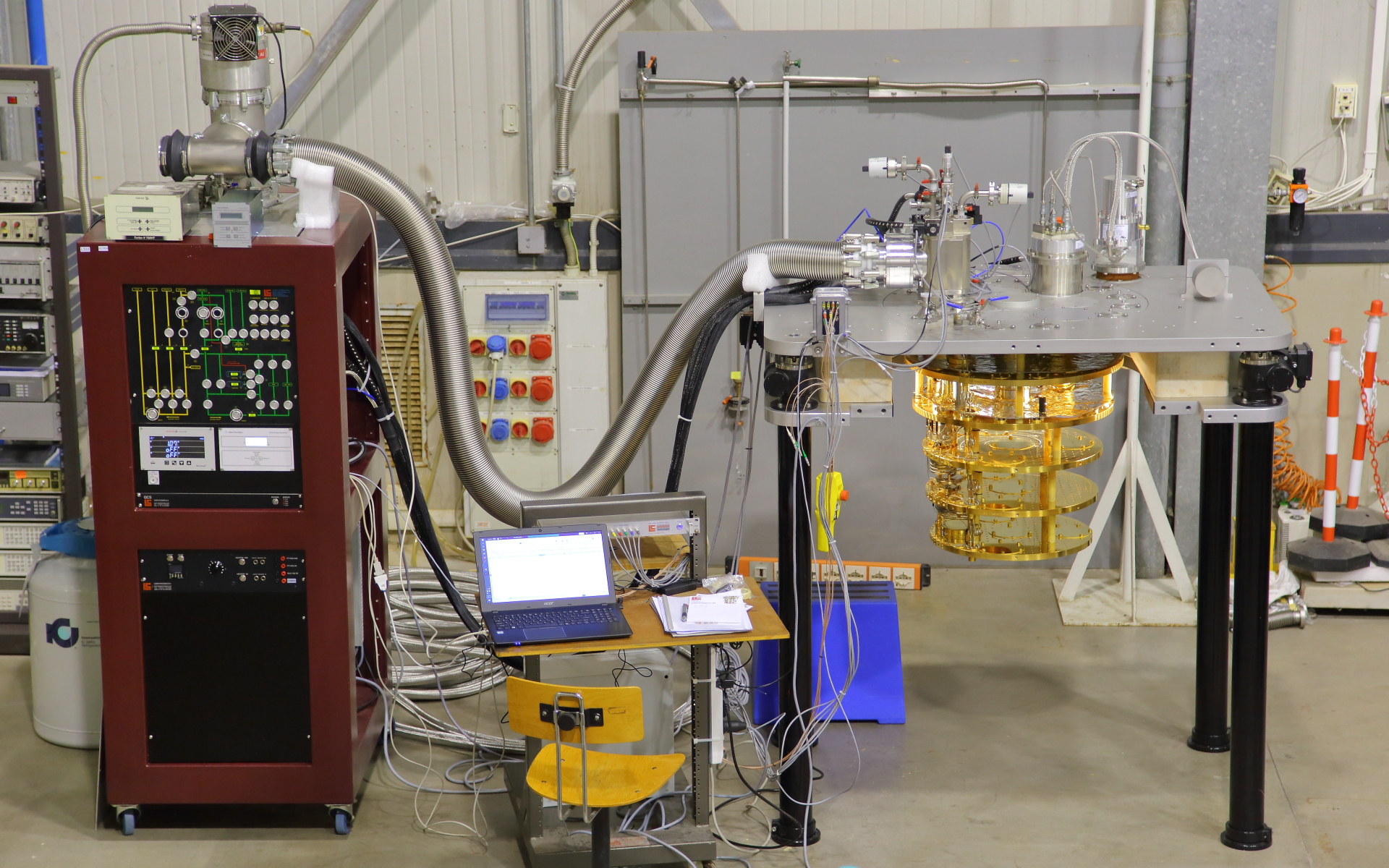
Dr. Berardo Ruggiero (Gender male), Italian Citizenship, was born  on 1962 in Naples, Italy. He received the doctoral degree “cum laude” in Physics from the University “Federico II” of Naples, Italy, in 1988. Berardo Ruggiero has been researcher (1988-2001) and senior researcher (2002-2019) at the CNR-ISASI, where he is now Research Director and the Responsible of projects in the field of Science Quantum Technologies , as well as of cryogenic laboratory at low noise in the very low temperature region (1 K- 40 mK). He is the responsible of Scientific Projects between INFN Section Naples and ISASI CNR on Reduced graphene oxide on silicon-based structure as novel broadband photodetector  (rGo-Photodetectors- 2020) and on Superconductivity Enhancement via Topology in Integrated Networks(SETIN – 2022). He has been responsible of Scientific European Projects on Nanotechnologies and national Projects on Superconducting Networks (FIRB, Commesse PRIN, Regione Campania L.41, and L.3.17, etc etc)  as well as Commessa CNR “MIcro e Nano Dispositivi Strutturati per sensoristica superconduttiva e fotonica -MIND”, MD.P04.022 in CNR – Dipartimento Materiali e Dispositivi (2010-2013). B.R. is a member of “Consiglio di Istituto”(2019 up to now). B.R. has been contract professor in Physics at Department di Ingegneria of Università della Campania “Luigi vanvitelli” (from 2002 – 2017). He has also been the President of the Associazione MQC2 to enhance international scientific exchange in the fields of Physical Sciences, Mathematics and Natural sciences in general, with particular attention to modern physics, to quantum mechanics and to advanced computer science. 
The main scientific interests of Berardo Ruggiero can be characterized as the study (mainly experimental) of superconducting networks based on Josephson junctions and qubits. He has been member of the steering committee of International Workshops on Macroscopic Quantum Computing. In 2004 he has been co-author of the volume edited by Kluwer Academic/Plenum Publisher, USA “Quantum Computing and Quantum Bits in Mesoscopic Systems” in particular with A.J. Leggett (2003 Physics Nobel Laureate). He is author of international volumes, more than 100 papers on referred journals. He is also author of national technogical patents and 130 contributions to international conferences.Actual scientific interests of Dr. Berardo Ruggiero are:  Solid State Physics; Weak superconductivity based on the Josephson effect; Physics of Josephson devices,  superconducting nanostructures, critical current fluctuations and electrodynamics of superconducting devices. Macroscopic quantum phenomena, Superconducting quantum bits, low noise measurements at ultra-low temperatures by using dilution refrigerators, dc and RF techniques.quantum coherence in Josephson devices including physics, material research and novel fabrication technologies for high coherence time superconducting qubits;  Areas of expertise of Dr. Berardo Ruggiero are: macroscopic quantum coherence, quantum computing, superconducting qubits; transport properties in superconductor-based networks; phase dynamics in unconventional junctions,low temperature measurements (up to 4.2 K)  ultralow temperature measurements by 3He/4He-dilution refrigerator (up to 20 mK) of Rabi oscillations and qubit spectroscopy of superconducting Josephson phase qubits.

Description of significant infrastructure and major items of technical equipment, relevant to the SUPERGALAX project

The research team has a long time experience in fabrication of thin film devices based on Josephson junctions and superconducting nanonwires. The research team has all necessary technological equipment for a full cycle device fabrication starting from photo mask realization up to final assembling of chips on chip carrier, namely:

Clean room facilities;

Laser writer system for laser beam photolithography Microtech LASERWRITER LW-2004;

Upgraded SEM FEI Quanta 600 adapted to electron beam with energy of 30 keV in modality of EBL (Electron Beam Lithography );

Laboratory of UV photolithography equipped by Karl Suss  mask aligner, Standard Cost Effective Equipment Hotplate 1100;

High vacuum dc-magnetron multi target (Nb, Al, Si) deposition system equipped with a cryopump and with an additional load-look chamber. Both the RF source and the extractor ion source IQE 11/35 (SPECS Company, Germany) are mounted into the load-look chamber;

Vacuum deposition system Leybold for thermal evaporation both metallic (Pb, Au, Al) and insulation  (SiO) thin films;

JUPITER II plasma system for reactive ion etching of thin films;

Wedge bonder; Alpha Step Profilometer;

Partners and researchers

No Name Short name Country Grant amount, Euro
1 National Research Council CNR Italy 424 348.75
2 Ruhr-University, Bochum RUB Germany 337 500.00
3 Loughborough University LU United Kingdom 386 463.75
4 Italy’s National Metrology Institute INRIM Italy 370 000.00
5 Karlsruhe Institute of Technology KIT Germany 348 170.00
6 Leibniz Institute of Photonic Technology IPHT Germany 363 500.00
7 National Institute for Nuclear Physics INFN Italy 226 250.00

Total consortium

2 456 232.50

Please click on the partner name in order to access to the institution description and CVs of the researchers involved in the project.

Project information

Project Coordinator Dr. Mikhail Lisitskiy (National Research Council of Italy (CNR), Institute for Superconductors, Oxides and Other Innovative Materials and Devices (SPIN- CNR), Italy
Starting date 01/01/2020
Duration in months 36
Call (part) identifier H2020-FETOPEN-2018-2019-2020-01
TopicFETOPEN-01-2018-2019-2020
FET-Open Challenging Current Thinking
Fixed EC KeywordsDark matter, dark energy, Photonics, Superconductivity, Metrology and measurement
Free keywordsSuperconducting qubits, driven superconducting qubits networks, collective AC Stark effect, single microwave photon detector, dark matter axions

Objectives

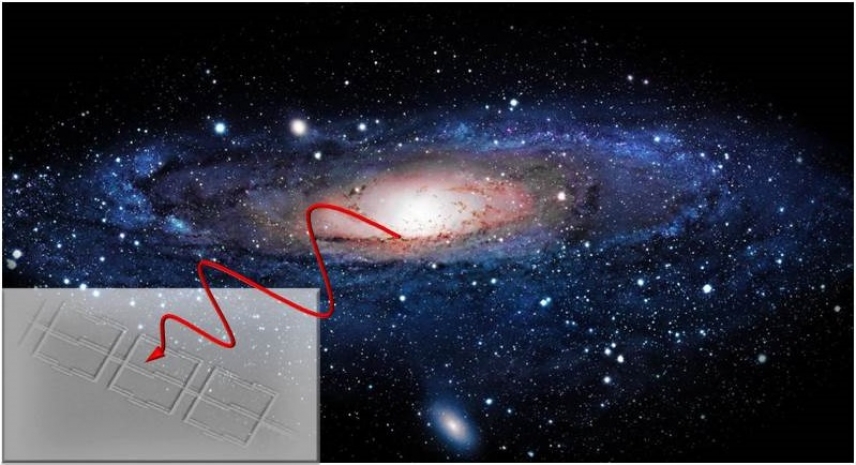
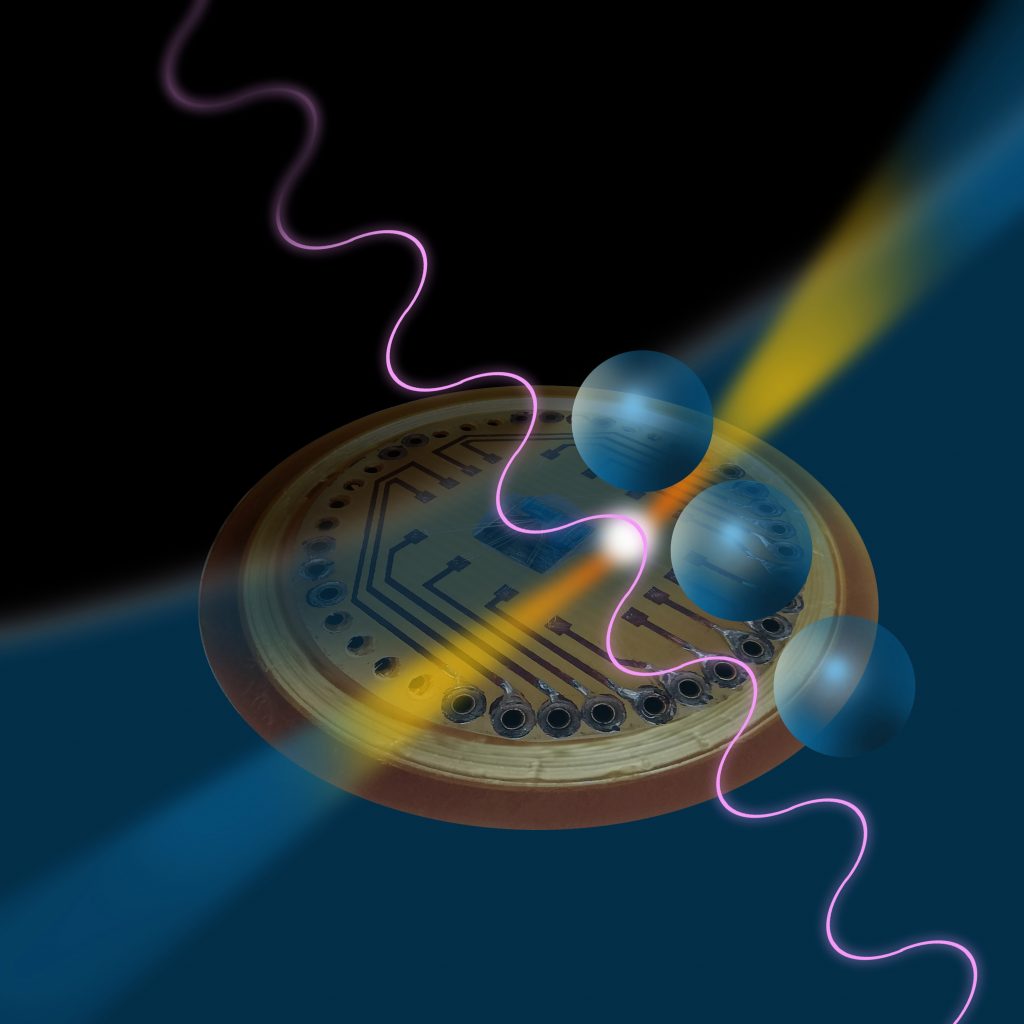
The ambition of the project is to develop and realize conceptually novel and practical quantum limited SQN detector capable to reveal single MW photons for a photon frequency of ~10 GHz with the Heisenberg limit of sensitivity and the quantum limit noise with a view to apply it to the QUAX (QUaerere AXion) experiment, an INFN funded search for galactic axions by means of both ferromagnetic and normal “haloscopes” [1][2].

The specific objectives of our project are as follows:

  1. Development of a single microwave photon detector based on moderate size networks of interacting superconducting qubits utilizing both transmons and flux qubits.
  2. Development of the Parametric Down Conversion (PDC) microwave photon source based on the Traveling Wave Josephson Parametric Amplifier (TW-JPA) with a clock frequency of few kHz
  3. Integration of the PDC MW photon source with two single photon SQN detectors in a common setup to develop an heralded single photon source and to carry out the test of the detectors at single MW photons.
  4. Installation of the single photon SQN detector integrated with the single photon source as a calibration element in a He free refrigerator of the QUAX Collaboration.
  5. Experimental study of feasibility of the single microwave photon SQN detector for the “haloscope” type of axion searching using the axion conversion in a magnetic field.

[1] Barbieri et al., Phys. Dark Univ. 15, 135 (2017).

[2] N. Crescini et al., Eur. Phys. J. C 78, 703 (2018).

News

The project SUPERGALAX celebrates the International Day on Women in Science!
https://supergalax.eu/the-project-supergalax-celebrates-the-international-day-on-women-in-science/
SUPERGALAX: tecnologie quantistiche per la ricerca di Assioni
http://w3.lnf.infn.it/supergalax-tecnologie-quantistiche-per-la-ricerca-di-assioni/
SUPERGALAX: Quantum technologies for the search of galactic dark matter axions
http://www.spin.cnr.it/index.php/news-events/item/100-supergalax-quantum-technologies-for-the-search-of-galactic-dark-matter-axions.html